

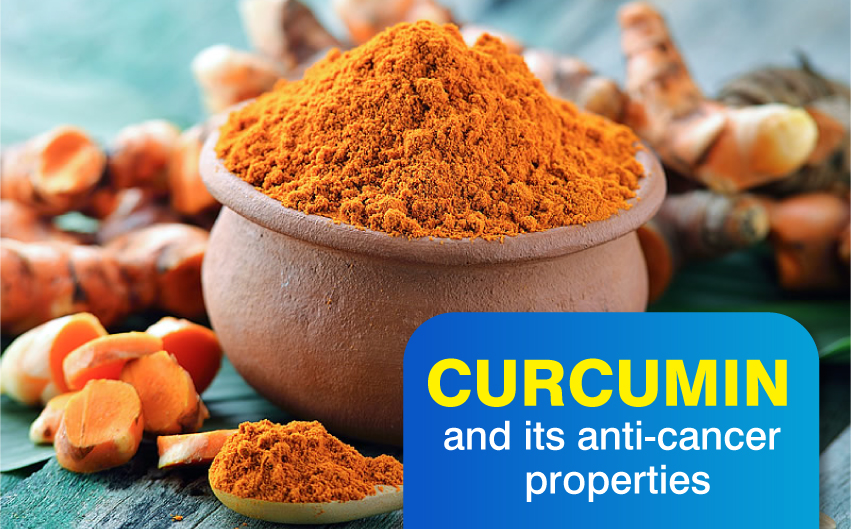
Spices have been widely used as condiments for thousands of
years because of their flavour, taste and colour. Several spices have been used
for treatment of various diseases as they contain many bioactive compounds and
possess a number of health benefits. Turmeric is the most recognised among them
and recent studies have focused on anti-cancer effects of curcumin, a
polyphenol extracted from it.
Cancer is the second leading cause of death worldwide. Despite
the substantial advances in cancer therapy, the incidence and mortality rates remain
high. Continuous research in cancer therapy has established novel strategies like
Chemoprevention to treat malignancy.
Chemoprevention is the use of particular synthetic or natural
compounds to reduce, suppress or reverse the incidences of carcinogenesis.
Various chemopreventive approaches have received attention from researchers due
to their anti-oncological perspectives. In this context, bioactive constituents
are being extracted using traditional plants as spices and herbs.
Curcumin, the active ingredient in Turmeric (Curcuma longa
plant), has demonstrated therapeutic benefits in multiple chronic diseases:
inflammation, arthritis, metabolic syndrome, liver disease, obesity,
neuro-degenerative diseases and above all, in several cancers. It is the main
ingredient or most active component of the spice turmeric, accounting for 2% of
the spice. Native to India and Southeast Asia, turmeric is a commonly used
spice.
Curcumin has many biological activities, although how these
effects occur is not fully understood. Studies have demonstrated that Curcumin
exhibits anticancer ability by targeting different cell signalling pathways,
including growth factors, cytokines, transcription factors, and genes
modulating cellular proliferation and apoptosis. It is a potent antioxidant,
which means it has the ability to neutralise molecules that cause DNA damage,
such as free radicals. As a result, Curcumin can decrease swelling and
inflammation and is currently being explored as a cancer treatment because
inflammation appears to play a role in cancer.
Laboratory and animal research suggests that Curcumin may
prevent cancer, slow the spread of cancer, make chemotherapy more effective and
protect healthy cells from damage by radiation therapy. Studies are being
conducted in people to investigate Curcumin as a therapeutic agent, but
clinical trials are still in relatively early stages. Despite the positive
views, possible side effects may occur if taken in large amounts. Curcumin has
also been shown to have a poor bio-availability due to its low absorption,
rapid metabolism, and systemic elimination that can limit its efficacy in
treatment of diseases. Consequently, many studies are now focusing on the
development of innovative delivery systems for improving the absorption of
Curcumin. Further research needs to be conducted to validate Curcumin as an
effective anticancer agent, but it represents a promising candidate as a
potential anticancer drug to be used alone or in combination with other drugs.
In the meantime, it wouldn’t hurt to include some turmeric to spice up your
diet.
(Authored by Ria
Elizabeth Joseph, BSc (Hons), Master of Nutrition & Dietetic Practice
(MNutrDiet), Accredited Practising Dietitian (APD), Cancer Survivorship Program,
Cancer Palliative Care Outcome Centre Queensland University of Technology,
Australia)







