

Obesity is the condition in which excess body fat accumulates to such an extent that health will be negatively impacted. It is one of the most common types of nutritional or metabolic disorders. A person having a body mass index of 30kg/m² or more is considered obese. The primary causes of obesity are a combination of excessive calorie consumption and a sedentary lifestyle. In rare cases, obesity can result from physical or mental illnesses and the pharmaceutical substances used to treat them. It can also be hereditary and inherited from parents. Obesity can lead to several health complications including hypertension, osteoarthritis and even cancer.
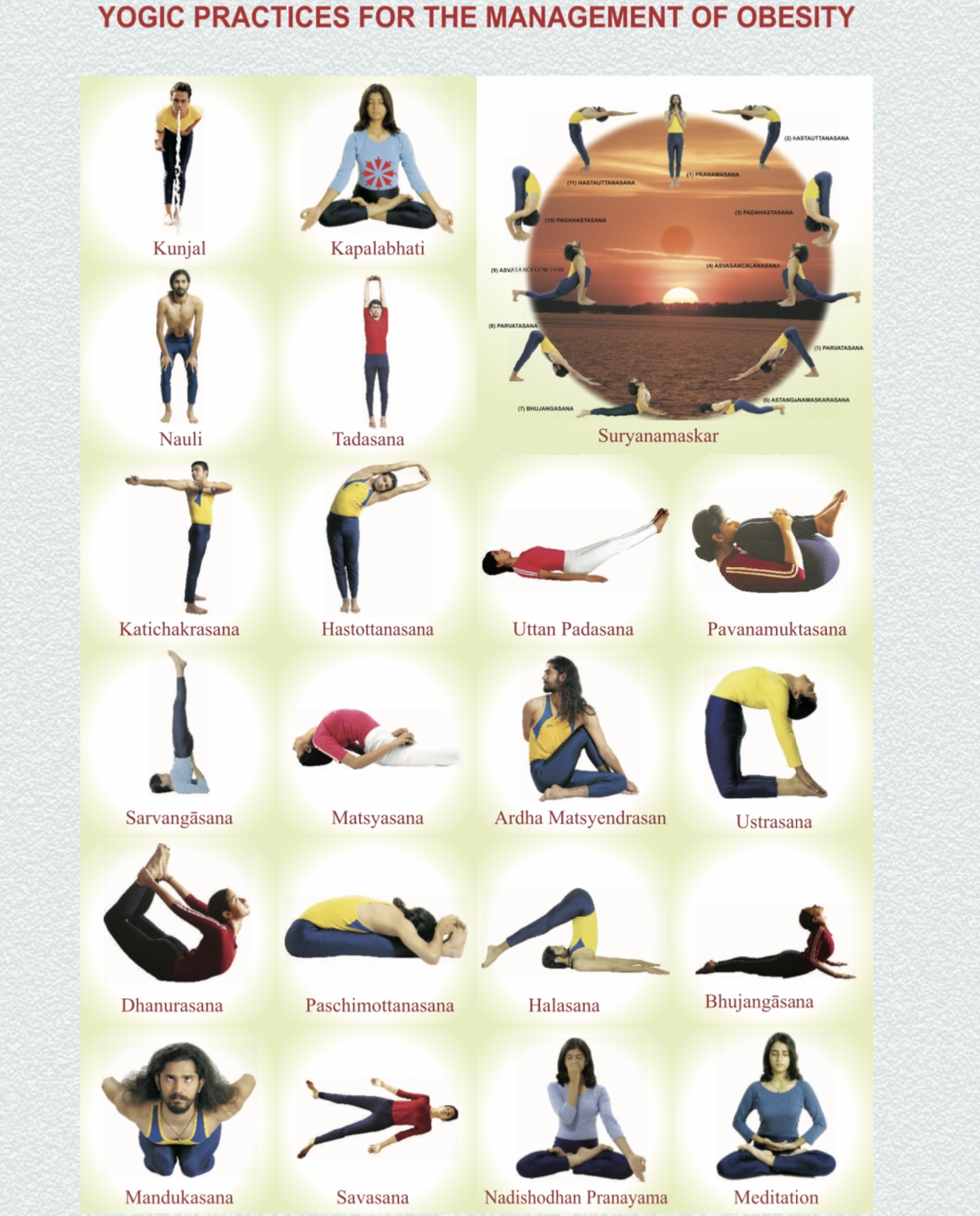
Obesity can be managed through Yoga through a series of exercises and diet. Yogic management of obesity starts with prayer and the chanting of ‘om’. This is followed by Shodhana Kriyas or breathing exercises which include techniques like Kapalabhati, Kunjal, Agnisara and Nauli. Following this Suryanamaskar is performed.
Sukshma Vyayama or focused exercises involving a set of movements aimed at loosening joints, removing energy blockages and improving overall well-being is next. Then comes 15 series of Yogasanas or yogic postures which include Tadasana, Katichakrasana, Matsyasana, Dhanurasana and Shavasana.
Then comes the 5 steps of Pranayama consisting of Nadishodhana, Suryabhedi Pranayama, Bhramari, Sitali and Bhastrika. The person is also advised to train on Yoga Nidra and acquaint oneself with the Yama and Niyama of Yoga, which is a set of guidelines detailing how to interact with the world outside and with the spirit within. This can help pacify a wandering mind and acquire control over the diet or food intake of the person.
Yoga recommends a satvic diet regimen for an obese person. This contains mainly fresh fruits and vegetables in its natural form and as soups. Rajasik food items like fried food, spicy food, soft drinks and beverages are to be avoided. Tamasik food like meat and alcohol should also be prohibited.
To manage obesity, one must have meals at regular intervals. Avoid reading or watching anything while eating. Eat slowly and chew the food properly. Keep away from unhealthy snacks and do not nibble in between meals. Engaging in physical activity is also important.
Make sure the process is carried out under the guidance of a professional to achieve desired results.