
Shatavari is known as the
‘Queen of Herbs’ as the herb is much effective in treating many disorders
affecting women, especially the problems related to the female reproductive
system. Noted Ayurvedic practitioner Dr Pretty Prabhakaran gives a brief information on the
herb found at low altitudes throughout India.
Scientific name: Asparagus racemosus wild
Family: Liliaceae
Names
Sanskrit
– Shatavari, Shatamuli, Shataveerya, Atirasa
Hindi
– Satavar
Malayalam – Shatavari
Kannada
– Majjige gande
Telungu
– Challa gadda
English
– Asparagus
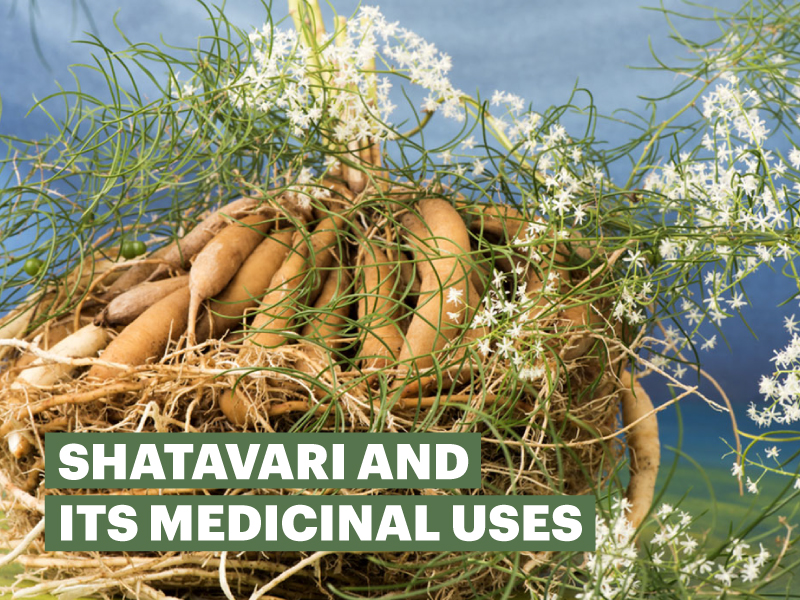
Shatavari in Sanskrit means “the
plant with hundred roots” owing to numerous roots of this natural herb. The
stems are thorny, delicate, brittle and smooth. The leaves are reduced to
minute spines. Flowers are white in simple or branched racemes. Fruits are
globular and purplish in colour when they ripe. Roots are succulent and
tuberous, from 30cm to 1meter in length and smooth tapering on both ends.
Properties
Rasa – Madhura, Tikta
Guna – Guru, Snigda
Veerya – Seeta
Vipaka – Madhura
Medicinal uses
Useful part – rhizome.
1)
It’s useful to mitigate
aggregated vata & pitta and provides nourishment and has coolant
properties. The extracted juice of rhizome mixed with honey is advocated in
conditions like Leucorrhea – white, greenish or a slightly yellow discharge
from the vagina, and Menorrhagia (menstrual periods with abnormally heavy or
prolonged bleeding; need medical evaluation to rule out the cause of excess
bleeding)
2)
Medicated milk boiled with
rhizome of Shatavari or its powder boiled in milk can be used to treat
Urinary Tract Infection
3)
Shatavari granules can be taken with
milk by those suffering from Stanya kshaya (low breast milk)
4)
Shatavari extract of rhizome can be
taken with equal amounts of water for complaints like hyperacidity, Peptic
Ulcer.
5)
Shatavari helps in treating numerous
hormonal problems and conditions like endometriosis (inflammation of the lining
of the uterus) in females