

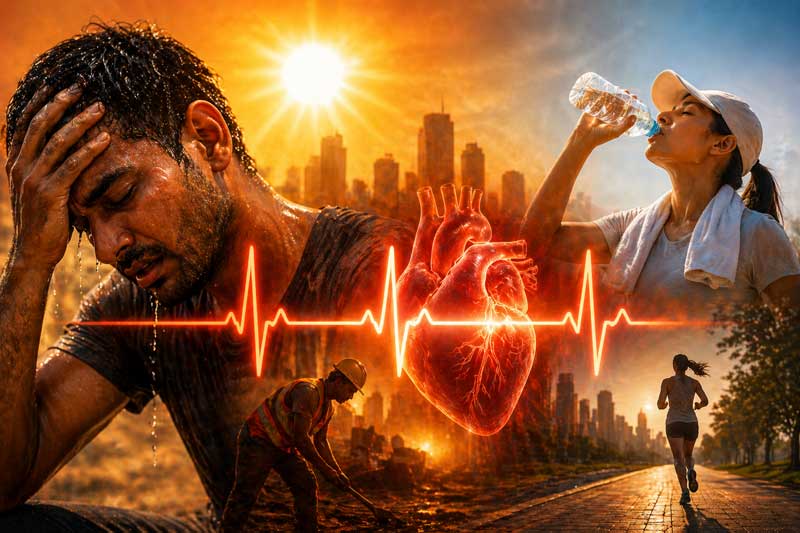
With mercury level soaring, it is imperative to keep an eye on heat-related illnesses such as heatstroke and heat exhaustion. Both conditions can be dangerous, but risks can be reduced by raising awareness and taking preventive steps
Prevention Tips
• Limit Sun Exposure: Stay indoors during peak heat hours (10 am to 4 pm). If outside, seek shade and wear a wide-brimmed hat.
• Stay Hydrated: Drink plenty of water throughout the day. Avoid sugary or caffeinated drinks, which may worsen dehydration.
• Wear Light Clothing: Loose, breathable fabrics help the body cool naturally.
• Take Breaks: If exercising or working outdoors, rest often in cool areas.
• Watch out for Warning Signs: Dizziness, nausea, rapid heartbeat, or confusion may signal heat exhaustion or heatstroke. Immediate cooling and medical attention are crucial.
• Use Sunscreen or oil: Protecting skin reduces stress on the body and prevents sunburn, which can worsen heat effects.
Heatstroke is a medical emergency, while heat exhaustion is an early warning that the body is overheating. By practicing simple precautions, one can stay safe and healthy even in extreme heat.
Steps to take:
• Move to cooler environs or shade: Quickly get the person out of direct sunlight into a cooler area.
• Cool the body: Fan the person and gradually apply cold compresses, wet cloth, or immerse in cool water if possible.
• Hydrate carefully: Offer small sips of water if the person is conscious. Avoid very cold drinks, as it may cause stomach cramps.
• Seek medical help: Heatstroke is life-threatening. Call emergency services immediately if confusion, fainting, or high fever occurs.
• Monitor vulnerable groups: Children, older adults, and those with chronic illnesses are more prone and need extra care.
As climate change issues are growing by the day, it would be ideal to acclimatise gradually to it and let the body adapt to the changes.







