

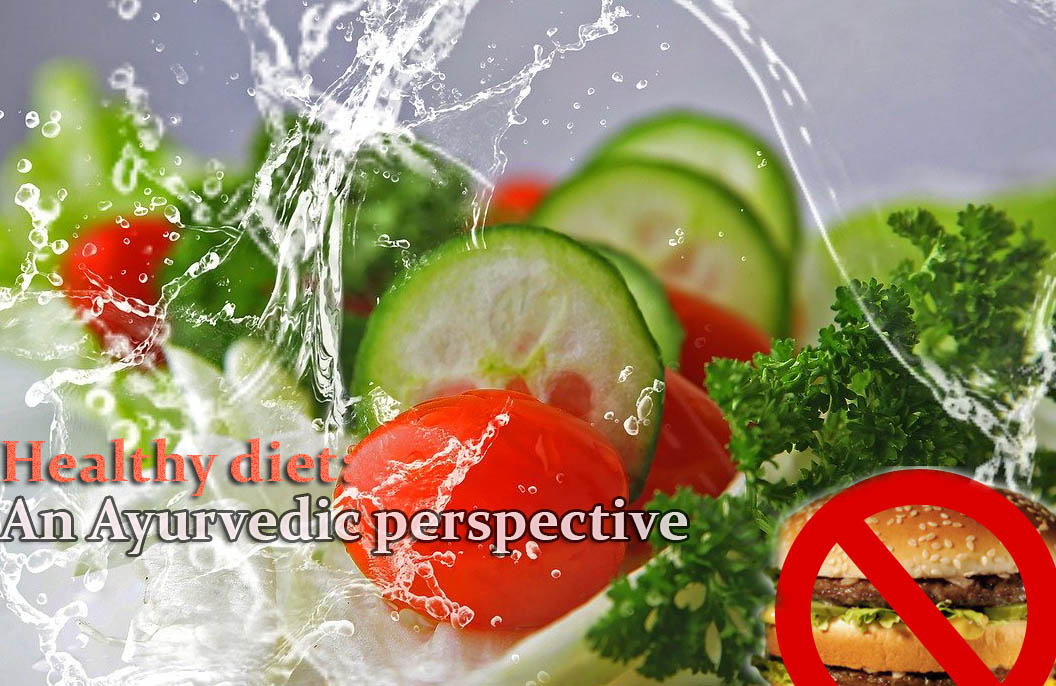
Ayurveda, the Life of Science, attaches
much importance to food in determining one’s health and prescribes a diet
according to the body constitution and seasonal regimen to counter the onset of
diseases. Dr Varun Vinayak explains all about the ‘Healthy Diet’ while
speaking in a webinar organised by the Ayurveda Promotion Society in
association with the Tourism Ministry.
According to Ayurveda, wrong eating habits are
responsible for almost all metabolic disorders like increased blood pressure,
high blood sugar, diabetics and the like. When you eat wrong or unhealthy food,
overeat or have poor digestion, toxins (Ama) get accumulated in your
body and block various channels absorbing food and releasing nutrients.
The three golden rules with regard to ‘What to
eat’ are: –
–to consume regionally and locally available
foods
–to have seasonal foods
–to eat traditional/habitual food. Eg) Rice for
South Indians
The staple diet (main food or foods eaten
regularly) should form 50 to 60 per cent of the meals while pulses, legumes and
vegetables should comprise of 20 to 30 per cent and Fruits, Fatty and Oily
items 10 to 20 per cent. One should take a complete meal twice or thrice a day.
However, the breakfast should not be skipped under any circumstances. There is
no specific rule regarding Lunch but those with less physical activities should
try to make it light. It’s always good to have a light and early dinner that
also comprises liquid food like soup.
Don’t eat until you’re full and always ensure to
take freshly prepared and warm foods (within three hours). Care should be taken
to avoid having incompatible foods. For eg) heating honey can actually produce
delirious effects in the body and can be fatal. Similarly, mixing unboiled milk
with raw fruits is not advisable. The continuous use of Yogurt should also be
avoided.
The basic principle is to keep one’s Agni
(digestive fire) robust. The common signs of unhealthy gut are Irritable Bowel
Syndrome, bloating, constipation, diarrhea, fatigue, sleep disturbance and the
like. A troubled intestine can send signals to the brain just as a troubled
brain can send signals to the gut. Often a person’s stomach disorder can be the
cause of anxiety, stress or depression.