

Highly
processed foods have artificially increased levels of refined carbohydrates
(sugar, white flour) and fat. These may trigger addiction-like responses
because they produce unnaturally high levels of reward in the brain. Lots of
refined carbs can also increase the rate at which the addictive food components
are absorbed into the bloodstream, creating a blood sugar spike. Research has
shown a link between blood sugar levels and activation of the parts of the
brain involved with addiction.
Not
everyone who likes pizza or chips will necessarily eat them uncontrollably. And
just because you find yourself craving junk food or even losing control over
your consumption of it may not mean you’re addicted to it. The Yale Food
Addiction Scale — a way to assess addiction-like eating behaviors — found that
food addiction often occurs in the context of other issues, such as depression,
anxiety, post-traumatic stress disorder (PTSD) and
attentiondeficit/hyperactivity disorder (ADHD).
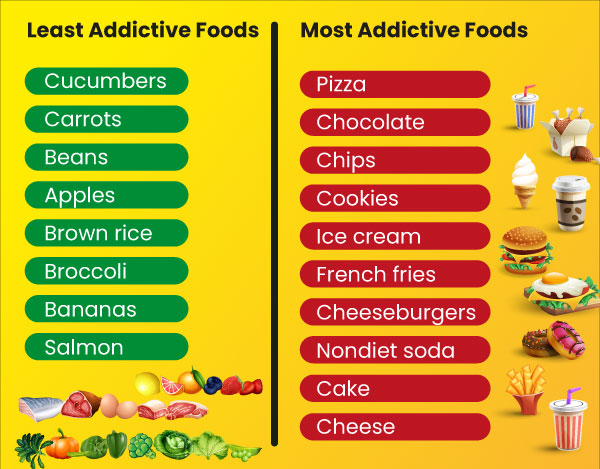
A
2015 study published in PLoS One ranked foods on their potential to be
addictive, with a score of 1 being not at all addictive, and 7 being extremely
addictive. As expected, ultraprocessed foods ranked high on the scale. Is it
any surprise addictive foods are common in the American diet?







