
India is taking an all-out effort to bring
out data-based evidence to enable Ayurveda to gain further global acceptance,
Prime Minister Narendra Modi has said.
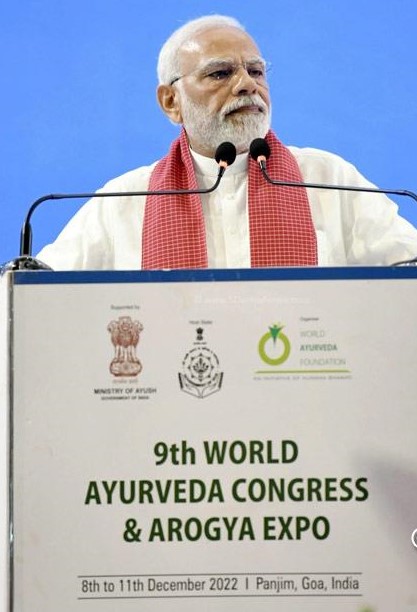
“It took so long for global consensus
and acceptance regarding Ayurveda because modern science considers the evidence as the basis. We had results as well as effects as far as Ayurveda is
concerned, but we were lagging behind in terms of evidence,” Modi said while
speaking at the valedictory function of the four-day 9th World Ayurveda
Congress that concluded on Sunday.
“And therefore, today it is imperative
for us to do documentation of ‘data-based evidence’. We have to work
continuously for a long time in this regard. We have to bring our medical data,
research, and journals together and verify each and every claim on modern
scientific parameters,” he added.
The prime minister said the past few
years saw the Government initiating efforts on a large scale in this direction,
including the creation of the Ayush Research Portal for evidence-based research
data.
“Taking that experience forward, we
are now moving forward in the direction of forming ‘The National Ayush Research
Consortium’. Important research related to Yoga and Ayurveda is also being done
in institutions like the Center for Integrated Medicine in AIIMS,” he said.
Modi pointed out that research papers
related to Ayurveda and Yoga are being published in prestigious international
journals, like the research papers that were recently published in respected
journals like the Journal of the American College of Cardiology and Neurology
Journal.
“I would like all the participants of
the World Ayurveda Congress to come, collaborate and contribute with India to
ensure global stature for Ayurveda,” the prime minister said.
Goa Governor P.S. Sreedharan Pillai, Chief
Minister Pramod Sawant, Union Ministers Sarbananda Sonowal, Shripad Naik, and Dr.
Mahendrabhai Munjapara, were among the dignitaries present on the occasion.
The prime minister earlier dedicated
three institutes related to AYUSH, the All India Institute of Ayurveda-Goa,
National Institute of Unani Medicine-Ghaziabad, and National Institute of
Homeopathy-Delhi, to the nation.
“Today, India has also put forward a
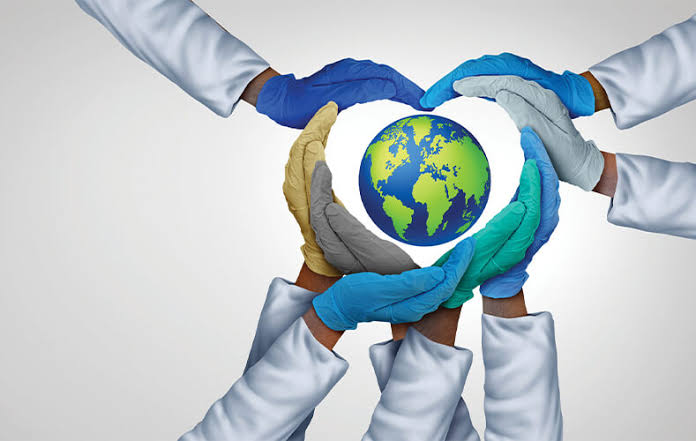
futuristic vision of ‘One Earth, One Health’ in front of the world. ‘One Earth,
One Health’ means a universal vision for health. The health of water-dwelling
animals, wild animals, human beings, or plants is interconnected. Instead of
seeing them in isolation, we have to see them in totality. This holistic vision
of Ayurveda has been a part of India’s tradition and lifestyle,” he added.