

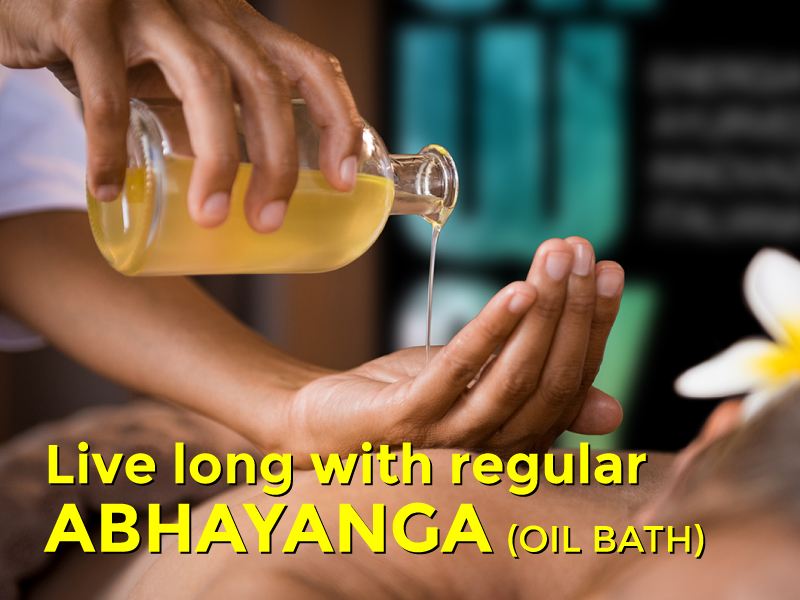
Are you in search of
glistening skin, immunity, physical strength and longevity? Practice Abhyanga,
one of the key routine practices recommended by Ayurveda.
‘Routine’ (or ‘regular’, if you may) is the key
word here. You have to have oil applied to all parts of your body and each part
massaged to life.
Dinacharya
For thousands of years now, it has been the
practice of health-conscious people in India to have a bath after applying medicated
oil all over the body. This was an important aspect of their daily routine,
called Dinacharya by Ayurveda texts.
That was, in a sense, their key to good health. Sadly, the custom has now taken
a hit, what with hectic lifestyles not permitting people the luxury of time for
an elaborate oil bath.
Oil bath pacifies Vata, nourishes the skin and tissues (dhatus) and dissolves toxins (ama).
Oil applied to the scalp and body seeps into the various layers of skin and
nurtures it. It energises the digestive system and ensures energy supply to the
other systems.
Two major benefits from daily oil bath is perfect
vision and sound sleep. Also it helps prevent skin disease and rheumatologic
disorders. Oil, both when applied by a professional masseur or be oneself,
gives the body a good massage. It leaves one profoundly relaxed, mentally and
physically agile, and tones up both the muscles and the skin.
Oil for the sick, oil for the healthy
Ayurvedic scriptures talk about different kinds of
medicated oils and therapeutic indications along with the mode of application
for people with different tridosha
constitutions. There are oils for general use too.
So choose your oil with care. Some oils are meant
for the sick while others are for the healthy. Sesame oil is regarded as the
best for all conditions. Coconut oil is advised for dandruff and psoriasis
patients. Children with recurrent cough, fever, breathlessness and tonsillitis
can use coconut oil processed with the leaves of Sahadevi (Poovaam kurunnila) or Akhukarni (Emilia sonchifolia).
Skin diseases like dry skin, dermatitis and fungal
infections are seen to respond considerably to coconut oil with Paranthy (lxora coccinia). Regular use
of black cumin seed-based oil keeps respiratory diseases and skin diseases away
in children.
Apply oil all over your body
Every part of the body must be oiled, starting with
the head. One has to remain oiled for at least 30 minutes before taking bath.
Those who are damp with perspiration should wait
for the body to cool down before applying oil.
Bathe
Following oil application, the body must be
cleansed with warm water. Never go for a hot water shower on head as it is detrimental
to the eyes. Bathing after dusk is not desirable.
Head bath
Individuals suffering from eye and ear ailments,
fever, cough, other respiratory diseases, diarrhoea and facial palsy should
strictly avoid massage and head bath.
Medicated oil meant for the body should not be
applied on the head, but oil recommended for the scalp can be applied on the
body.
Oils meant to arrest hair fall and stimulate growth
is not good for a patient suffering from sinusitis or cold.
It is recommended to take bath at least half an
hour to one hour after applying oil. A morning Abhyangam is always advisable.
An oil bath first thing in the morning will leave
you profoundly relaxed, both mentally and physically.