

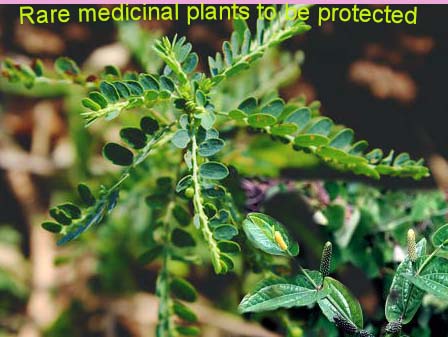
In a measure aimed at protecting rare medicinal plant
resources, the Centre has initiated an inter-ministerial co-operation for
conservation of Germplasm on a long-term basis.
Germplasm conservation is the most successful method to
conserve genetic traits of endangered and commercially valuable species.
Germplasm is a live information source for all the genes present in the
respective plant, which can be conserved for long periods and regenerated when
needed in future.
The National Medicinal Plants Board (NMPB) under the Ministry
of AYUSH and the ICAR-National Bureau of Plant Genetic Resources (NBPGR) under the
Department of Agricultural Research and Education have entered into a
Memorandum of Understanding (MoU) in this regard on July six.
“The purpose of the pact is to conserve the Medicinal and
Aromatic Plants Genetic Resources (MAPGRs) at designated space of ICAR-NBPGR (long-term
storage module in the National Gene bank and/ or at
Regional Station for medium term storage module) and acquire hands-on training
on plant germplasm conservation techniques …,” the AYUSH ministry said in a
statement.
Both the NMPB and the ICAR-NBPGR are committed to serve the national
interests through conservation of germplasm on long-term basis, safely and
cost-effectively for present and future generations to ensure social and
economic security. The two organisations would develop detailed modalities for
seed storage of MAPGRs and submit periodic progress reports.
Medicinal Plants are regarded as rich resources of
traditional medicines and are being used for thousands of years in the health
care system. India has rich diversity of medicinal Plants (MPs) resources. The
natural resources are gradually getting depleted due to various developmental
activities in its habitat.
There is a need to conserve these natural resources and make their
sustainable utilization. The conservation of plant genetic resources is an
integral part of biodiversity conservation. The purpose of conservation is to
make sustainable development by protecting and using natural resources in ways
that do not diminish the variety of genes and species or destroy important
habitats and ecosystems.