

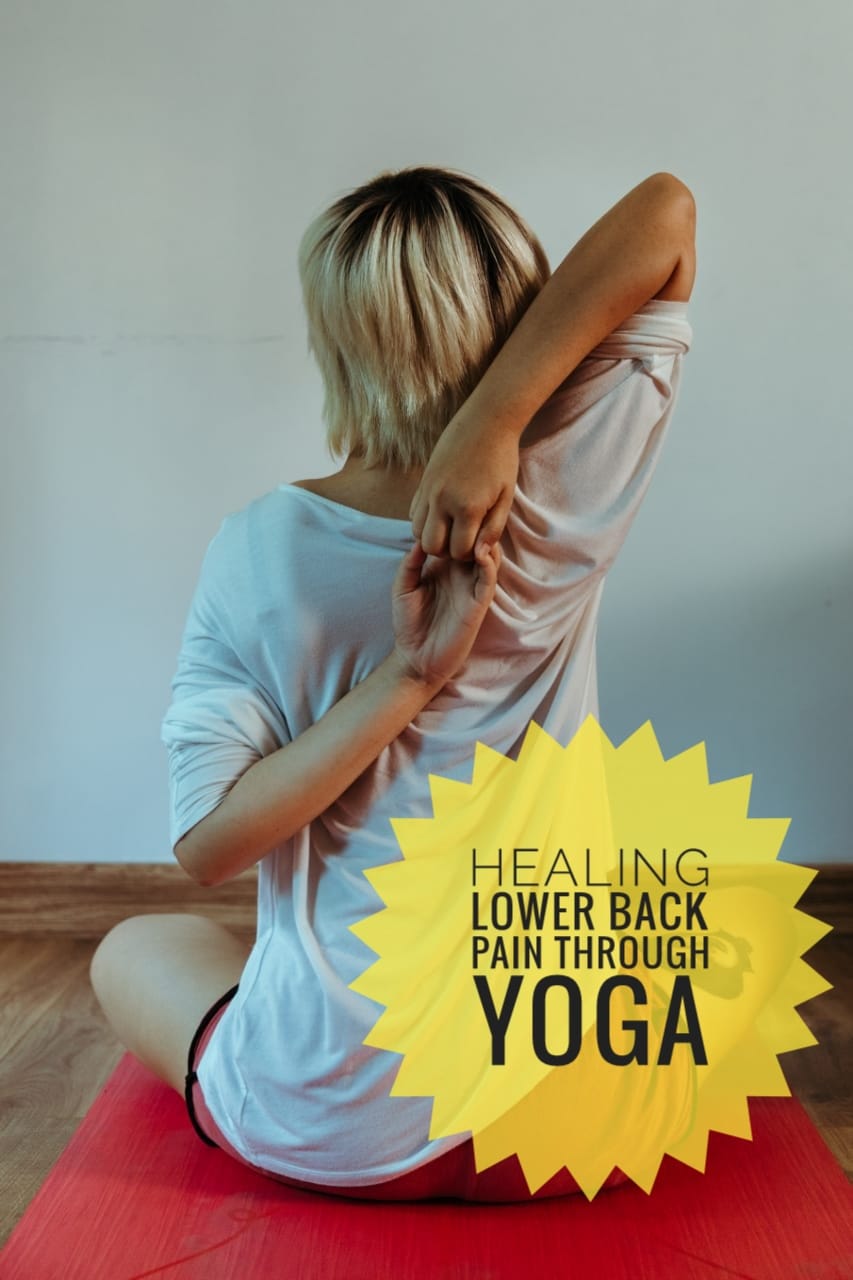
Yoga, the ancient healing system, seeks to bring about a
harmonious union of the mind and the body. It’s not just about physical
exercises and helps with a wide range of physical and mental wellness issues,
from easing depression to boosting cardio and circulatory health, enhanced
respiration and maintaining a balanced metabolism among others. On the eve of
International Yoga Day, Clea Arroyo, a reputed Copenhagen-based Yin Yoga
Teacher and Craniosacral Therapist, shares how the traditional art and
science could relieve lower back pain, an ailment suffered by a large number of
people across the globe. She also provides a few ayurvedic solutions that one
can easily practise amid today’s hectic schedules.
As per Ayurveda, another traditional healing system from India,
there are three fundamental constituents of the individual body — and the world
around us — each made up of a different combination of five great elements:
ether, air, fire, water, and earth. Pitta dosha is fire and water, and Kapha
dosha earth and water. Vata dosha, ether and air, is most commonly
involved with lower back pain. Lower back pain can be caused by various
injuries, arthritis, illness, hernia or spinal problems. It can be in a
specific area or spread over a large area.
The spine is not a straight line. Imagine the spine’s shape
from the back of the torso: The neck (cervical spine) curves in, the mid- and
upper-back (thoracic spine) rounds out, and the lower back (lumbar spine)
curves in again. The base of the spine and the sacrum is a series of fixed bony
segments that also curve in.
When you flatten your back or tuck your tailbone when you
stand, you tend to inhibit the normal action of your abdominal muscles, distort
the curves of your cervical and lumbar regions, compress your vertebral discs
in an unhealthy way, compromise the stability-creating disconnection between
your sacrum and pelvis or displace your abdominal organs by moving them back
and down and it can interfere with your breathing.
That’s why Yoga can help to manage and reduce back pain. Yin
Yoga, being a slow-paced quiet practice that cultivates inner and outer
stillness, is particularly effective in reducing the causes of back pain and
the stress that comes along with it. Yin Yoga can also help to release and
lengthen chronically contracted fascia.
When we stress the fascia of our low back while being in a
Yin Yoga pose and pay attention to the sensations, the nociceptors switch from
being pain receptors to pressure receptors. With less pain, there’s less
psychological stress, which in turn lowers our immune system.
Another tool we can use in our Yoga practice is our breath.
By slowing down the breath, we activate the parasympathetic nervous system, and
turn off the stress inducing sympathetic nervous system. This helps to reduce
chronic inflammation and chronic contraction of the fascia in the low back.
Here’s a suggested sequence you can do to relieve back pain
with Yin Yoga
· Meditation
· Butterfly (3 ~ 5
minutes)
· Shoelace (3 ~ 5
minutes left and right)
· On hands and knees and stretch like in
cat-cow pose (1 min)
· Square (3 ~ 5
minutes)
· Rest on back flat
on the mat (1 min)
· Crescent Moon (3 ~
5 minutes left and right)
· Rest flat on
stomach on the mat (2 min)
· Seal or Sphinx (3
~ 5 minutes)
· Melting heart (3 ~
5 minutes)
· Rest flat on
stomach on the mat (2 min)
· Sleeping Swan (3 –
5 minutes left and right)
· Rest on back flat
on the mat (1 min)
· Sleeping mermaid
(3 – 5 minutes left and right)
· Shavasana
(10 min)
Notice what you are feeling while in the postures and when
you come out of the poses, and even over the next few days. The intention is to
heal, pay attention to sensations and to relax.
Sometimes back pain stems from emotional stress; whether it’s
from a busy life, financial matters, guilt or due to lack of emotional support.
The stress we experience in the mind gets experienced in the body. Once an
actual incident occurs, certain areas of the body can go into spasm to protect
the weak point, and the on-going pain and tension in the body, can result in our
being more emotional.
In such circumstances, it’s important to relax the body and the
mind as much as possible. When the mind is quiet, it is easier to return to
that place of trust and the calm region within. It also helps ease the nervous
system towards the parasympathetic state which gives us the ability to rest and
relax.
There are also a few ayurvedic solutions to reduce vata
dosha, and provide relief from pain, particularly back pain: –
1. Stay warm
One of the main qualities of vata dosha is that it’s
cold. Comfort is the warmth factor to pain relief.
2. Reduce your intake of spices
Consuming a lot of spices in your food can have a very drying
effect on the body and this can lead to constipation back pain.
3. Eat warm foods
Coldness creates constriction and congestion in the body,
while the appropriate amount of heat provides expansion and allows the
stool-carrying channels in the body (called srotas) to stay open so that
you can eliminate your food.
4. Practice Uttanasana
Uttanasana (standing forward bend pose) for 30 seconds allows the body
to eliminate lower back pain and the constriction of the stool-carrying
channels caused by constipation.
5. Oil your body
If the skin is very dry, then nourishing your body with warm
sesame oil before taking a warm shower makes the skin strong, moist and soft.
Stress, exertion, depletion, and tiredness all increases vata dosha. Dryness
and too much accumulated buildup of vata dosha leads to early aging in
addition to pain in various parts of the body, especially the lower back.







